














Bullard has earned its reputation as one of the most desirable places to put down roots in Smith and Cherokee counties. The schools draw families, the pace attracts people leaving larger cities, and the steady stream of new construction means the community keeps growing without losing the character that made it appealing in the first place. But that growth has created something that does not show up in real estate listings: a community where a large share of the housing stock is young enough that homeowners rarely think of their electrical systems as something that could fail unexpectedly, yet old enough and loaded enough with devices the original installation never anticipated that failures are happening with increasing regularity. Patriot Electric, Heating and Cooling has worked across this part of East Texas for more than 20 years. We are locally owned, fully licensed for residential and commercial electrical work, and we have spent enough time in Bullard properties to understand exactly what the electrical systems here are being asked to do versus what they were actually designed to handle.
One of the more quietly dangerous assumptions a homeowner can make is that a newer home comes with a forgiving electrical system. Newer does not mean unlimited capacity, and it does not mean the installation was done with room to grow. Many Bullard homeowners have discovered this during a moment that felt minor at first — a breaker that tripped when the EV charger and the oven ran at the same time, an outlet near the garage that stopped working without any obvious cause — and then escalated quickly once they started investigating. These are the conditions that cross from inconvenient into urgent and should prompt an immediate call to a licensed electrician: The thread connecting all of these is that each one is the visible expression of something happening deeper in the system — something a licensed electrician can trace accurately and resolve correctly, and something that does not improve on its own with time.
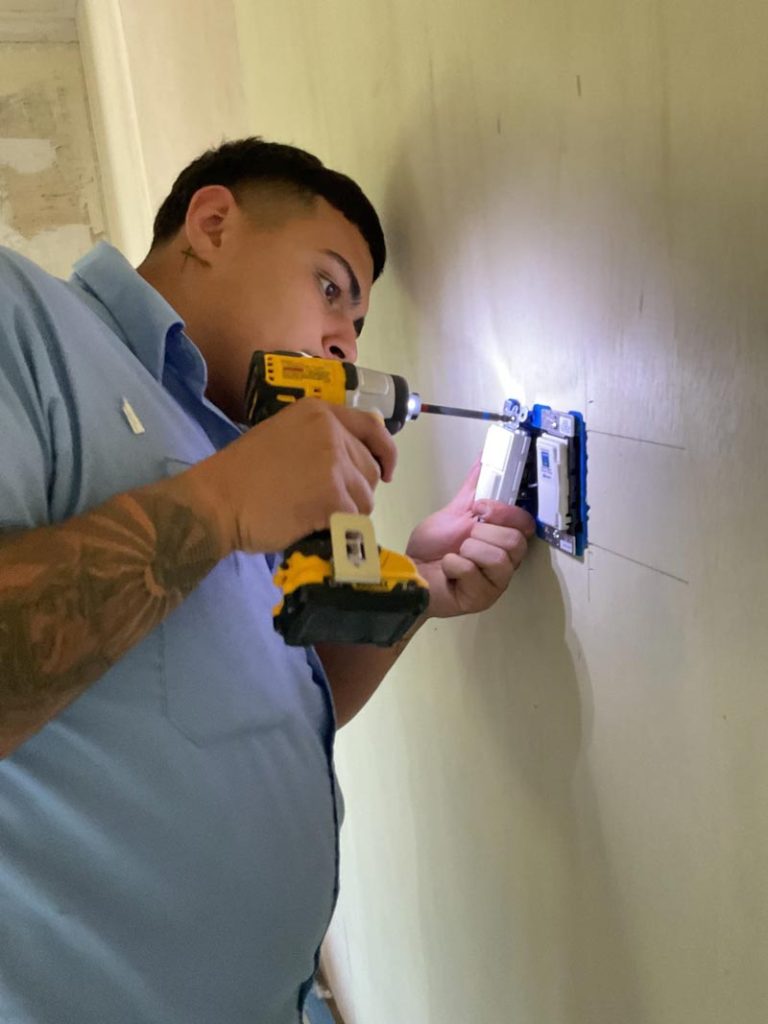
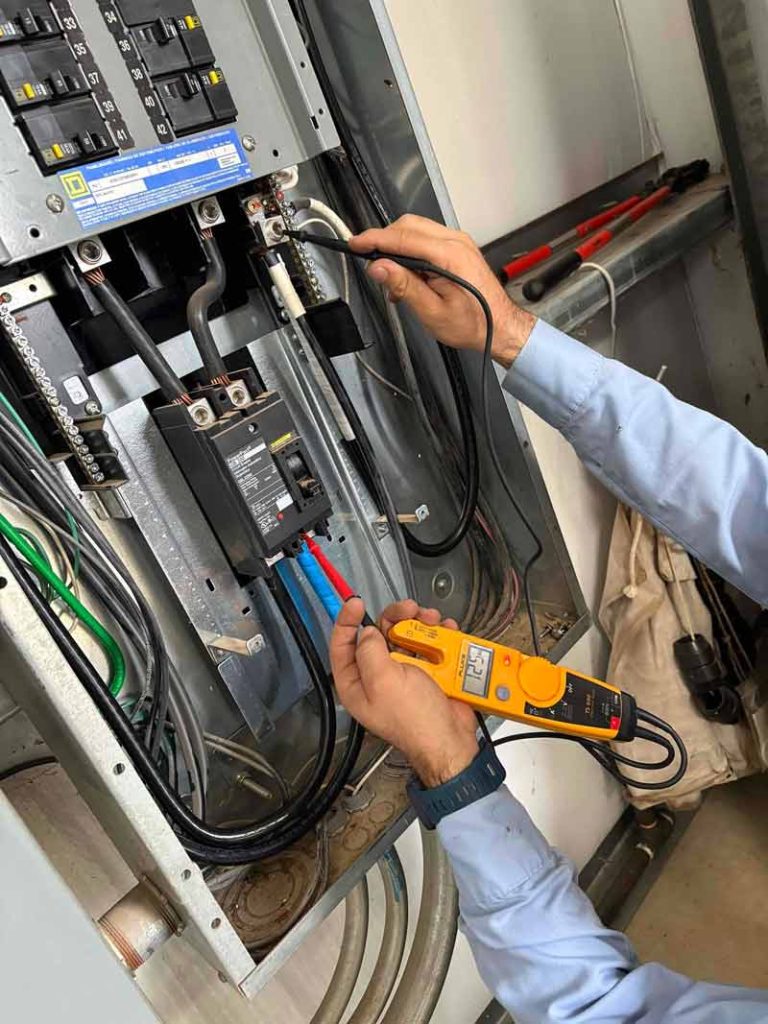
Patriot Electric, Heating and Cooling carries full residential and commercial electrical licensing, and every emergency call we take in Bullard includes our 32-point electrical inspection. In a community where homes are newer but increasingly loaded with high-draw infrastructure, that broader diagnostic view matters more than it might in a community with a more static electrical demand profile. The emergency services we deliver in Bullard include: Whatever brought you to the phone, we arrive at every Bullard call ready to find the actual source of the problem rather than the location where the symptom first became impossible to ignore.
Bullard’s residential growth has been almost entirely new construction, which means the conversation about electrical emergencies here starts in a different place than it does in communities with older housing stock. There are no aluminum wiring risks from the 1970s, no panels from the Reagan era approaching four decades of service. What Bullard has instead is a specific category of newer-construction electrical risk that is easy to underestimate precisely because the homes look and feel so current. Production homebuilding in the Smith and Cherokee County corridor has moved fast over the past 15 years, and fast construction means electrical installations completed to code at time of inspection but not designed with the full future load of the home in mind. A 200-amp panel installed in 2012 for a family running standard appliances and a single AC unit is a fundamentally different animal in 2025 when that same home has added a Level 2 EV charger, a standby generator transfer switch, a hot tub on the back patio, and a workshop subpanel in the detached garage. The math on available capacity changes dramatically with each addition, and most homeowners are not tracking that math until something trips and refuses to reset. East Texas storm season adds its own layer to Bullard’s emergency profile. The city sits far enough south of the Tyler metro that storm cells often arrive with full intensity, and newer Bullard subdivision homes sold without whole house surge protection as a standard feature absorb whatever voltage irregularities those storms deliver directly into the panel. These are the emergency patterns that define what we handle in Bullard: The electrical emergency landscape in Bullard is not about age — it is about the gap between what these homes were built to handle and what they are actually being asked to do. Closing that gap safely and correctly is what every call we take here is about.
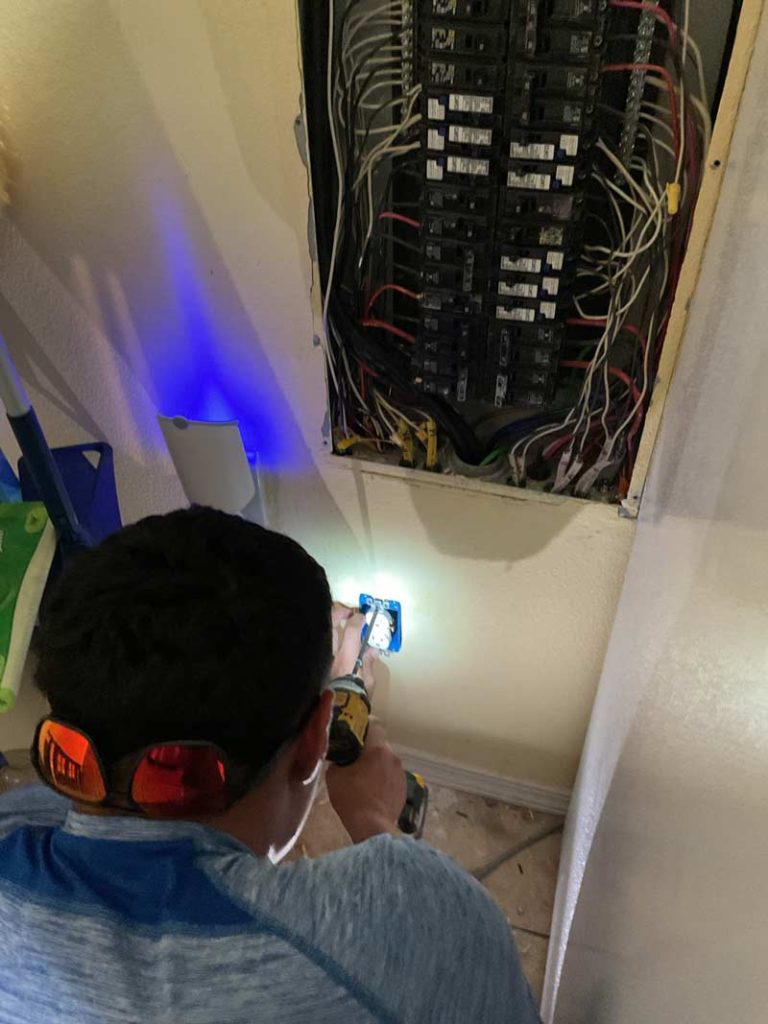
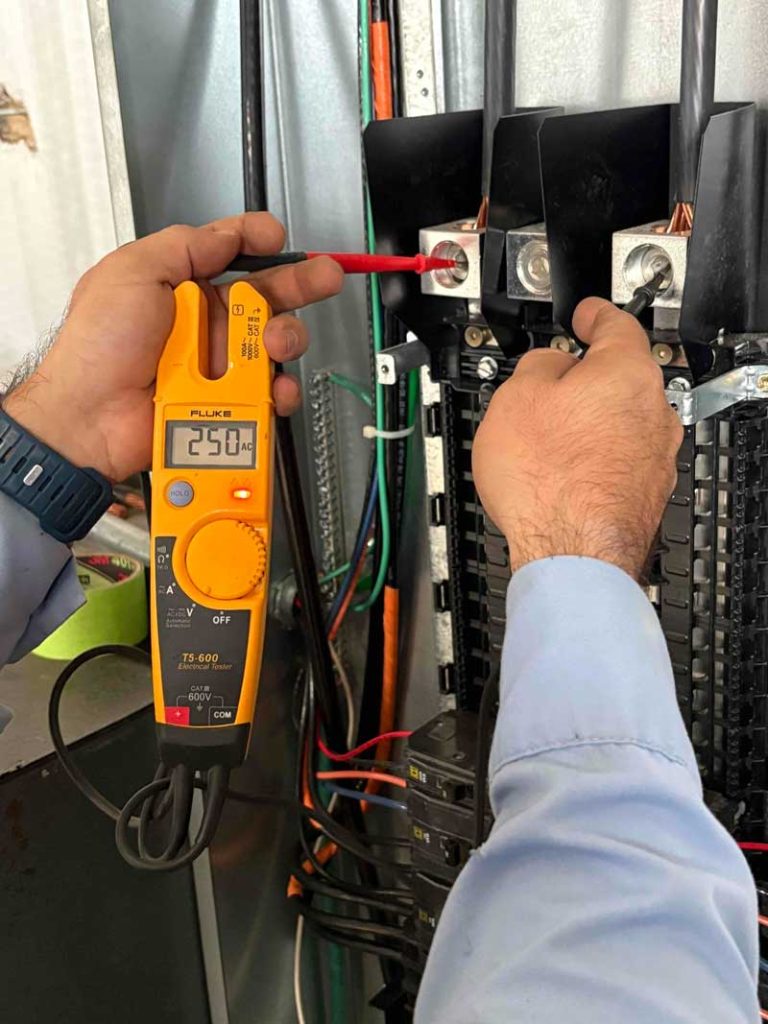
We received a call from a Bullard homeowner named Stephanie on a Saturday morning in July. Her home was about nine years old and she had been noticing for several weeks that the breaker serving her EV charger tripped roughly once a week, usually on evenings when both the charger and the central AC were running hard. That Saturday, the breaker tripped and refused to reset. When she opened the panel to check it, she noticed two things she had not seen before: the charger breaker was noticeably warmer than the ones beside it, and there was faint discoloration on the interior of the panel door near that position. When our technician arrived and began testing, the breaker itself had failed due to a combination of factors. The EV charger circuit had been wired with a breaker sized at the edge of the charger’s continuous load requirement, which meant the breaker had been running near its thermal limit every time the charger operated at full draw. At that thermal margin, the connection between the breaker and the bus bar had developed enough resistance over years of heating and cooling cycles to accelerate the breaker’s internal failure. The breaker was replaced with a correctly rated unit, the bus bar contact point was cleaned, and the full panel was tested under load. What the inspection also surfaced was that the panel had only two open slots remaining out of its original capacity, and that the total connected load calculated across all circuits already exceeded 85 percent of the panel’s rated service. Stephanie had been planning to add an outdoor kitchen circuit before the end of summer. That conversation changed after she saw the numbers. She opted for a panel upgrade rather than adding one more circuit to a system that had no real room for it. She said the nine-year-old home had felt brand new to her right up until that morning, and that she had never thought to question whether the electrical system had kept pace with everything she had plugged into it since she moved in.
People move to Bullard because they have thought carefully about where they want to raise a family and what kind of community they want around them. That same deliberateness tends to show up in how they maintain their homes and who they trust to work in them. They are not looking for the first available contractor. They want someone who will give them an accurate picture of their situation, explain the options without pressure, and do the work in a way that holds up — because in a community where neighbors talk and reputations travel quickly, the contractors who cut corners do not last long. What we bring to Bullard emergency calls is two decades of East Texas electrical experience applied specifically to the conditions that newer-construction communities produce. We are not guessing about what a nine-year-old production home’s panel looks like inside, or what happens to a builder-grade breaker that has been running at 90 percent of its thermal rating every time the EV charger runs. We have seen it enough times in enough Bullard homes to move from arrival to accurate diagnosis without the exploratory phase that a less experienced contractor would need. That speed is not just convenient — in an emergency, it is the difference between a Saturday morning repair and a Sunday spent without power waiting for a second opinion. Our dual licensing for electrical and HVAC work also pays off in Bullard specifically because newer homes here tend to have tightly integrated systems. A surge event that damages the panel almost always reaches the HVAC control board in the same pass. A capacity emergency that affects the panel during peak summer load is frequently discovered because the air handler stopped responding at the same time as everything else. Being licensed and equipped to evaluate and repair both systems in a single visit means Bullard homeowners get a complete resolution rather than a partial one, and they get it faster than coordinating two separate contractors would allow.
The number of open breaker slots in a panel is not the same as available electrical capacity. A panel can have several empty slots and still be running at or near its service limit if the existing circuits are drawing close to the panel’s rated amperage. The only accurate way to assess available capacity is a load calculation that accounts for the connected load of every circuit in the panel and compares it to the panel’s rated service. A licensed electrician can perform that calculation and tell you whether your planned additions are feasible within the existing service or whether a panel upgrade is the more responsible path forward.
Arc-fault circuit interrupter breakers are designed to detect the electrical signature of arcing in a circuit before that arcing produces a fire. They are required in most living areas in homes built under current codes and are considerably more sensitive than standard thermal-magnetic breakers. When an AFCI breaker trips repeatedly, it is detecting something — either a genuine arc condition in the wiring or a connected device that is producing a waveform the breaker interprets as arc activity. The answer is not to replace the AFCI with a standard breaker. The answer is to identify what is triggering it, which requires a licensed electrician to test the circuit and connected devices systematically.
Yes. Connection quality in production homebuilding is directly tied to installation speed and the care taken by the individual installer. Breaker terminals, neutral bar connections, and service conductor lugs that were not tightened to the manufacturer’s torque specification at installation begin generating heat under load from the first day the panel is energized. Over 10 years of daily thermal cycling, those under-torqued connections can progress from a minor resistance condition to a visible heat event at the panel interior. Age alone does not protect a connection that was installed incorrectly from the beginning.
It depends entirely on how the transfer switch was installed and whether it properly isolates the home’s circuits from the utility grid before the generator connects. An improperly installed transfer switch can allow generator power to back-feed onto utility lines, creating a serious hazard for utility workers restoring power, and can also damage the generator when utility power returns. If your transfer switch was installed without a permit or without inspection, having a licensed electrician evaluate the installation before the next outage occurs is the responsible step — not something to defer until the system is actually needed under emergency conditions.
The utility company is generally responsible for the service lines from the pole to the meter, including the meter itself. Everything on the home side of the meter — the service entrance conductors, the weatherhead and mast, the panel, and all internal wiring — is the homeowner’s responsibility. In practice, the line between what the utility will address and what requires a licensed electrician varies by provider and by the nature of the damage. When in doubt, have a licensed electrician evaluate the full path from the weatherhead through the panel before assuming the utility’s restoration of service means everything inside the home is also intact.