
Ductwork
Expert Ductwork Services in Tyler, TX & Surrounding Areas
Ductwork is the unsung hero of your HVAC system, acting as the circulatory system that distributes conditioned air throughout your home or business
At Patriot Electric Heating and Cooling, we offer comprehensive ductwork services in Tyler, TX, and the surrounding areas, including installation, repair, cleaning, and sealing. With over two decades of experience, our certified technicians understand that even the most efficient AC and heating units can't perform optimally without a well-designed and maintained duct system.
We are committed to ensuring your entire HVAC system works cohesively, providing maximum comfort and energy efficiency. Our transparent pricing and dedication to customer satisfaction mean you can trust us for all your ductwork needs.
Why You Need Well-Maintained Ductwork: The Foundation of HVAC Efficiency
Many homeowners overlook their ductwork, assuming it's a "set it and forget it" component. However, your ductwork plays a critical role in your HVAC system's performance, indoor air quality, and energy consumption. Here's why proper ductwork is absolutely essential:
Efficient Air Distribution:
- The Delivery System: Your heating and cooling units produce conditioned air, but it's the ductwork that carries this air to every room in your home and returns stale air for re-conditioning. Without properly designed and sealed ducts, heated or cooled air won't reach its intended destination efficiently.
- Even Comfort: Well-balanced ductwork ensures consistent temperatures throughout your entire property, eliminating hot and cold spots and providing uniform comfort.
Optimal HVAC System Performance:
- Maximizing Unit Efficiency: Your AC and furnace are designed to work with a specific amount of airflow. Leaky, undersized, or poorly designed ducts force your HVAC system to work harder to push or pull air, leading to decreased efficiency, increased wear and tear on components, and ultimately, a shorter lifespan for your expensive equipment.
- Preventing Strain: Proper duct sizing and sealing reduce the strain on your blower motor, compressor, and heat exchanger, allowing them to operate as intended.
Significant Energy Savings:
- Preventing Air Loss: Leaky ducts can lose a significant amount of conditioned air (often 20-30% in typical homes) into unconditioned spaces like attics, crawl spaces, or basements. This means you're paying to heat or cool areas that don't need it.
- Reduced Utility Bills: Sealing and insulating your ductwork can lead to substantial reductions in your monthly heating and cooling bills by ensuring all the conditioned air reaches your living spaces.
Improved Indoor Air Quality (IAQ):
- Preventing Contaminant Entry: Gaps and leaks in ductwork can pull in unconditioned air from attics, crawl spaces, and wall cavities, bringing with it dust, insulation fibers, mold spores, pests, and even noxious fumes. This compromises your indoor air quality.
- Reduced Allergens and Pollutants: Clean and sealed ducts mean fewer entry points for outdoor pollutants and less recirculation of existing indoor dust and allergens, creating a healthier living environment, especially for those with allergies or respiratory conditions.
- Controlling Humidity: Properly sealed ducts help maintain consistent humidity levels, preventing excessive moisture that can lead to mold growth.
Enhanced Comfort and Health:
- Eliminating Drafts and Stuffy Rooms: Poor ductwork can lead to drafts or stuffy rooms where air isn't circulating properly. Optimized ductwork ensures balanced air pressure and comfortable airflow.
- Reducing Noise: Well-designed and sealed ductwork can help reduce operational noise from your HVAC system.
Common Ductwork Problems We Address:
- Leaky Ducts: The most common issue, leading to significant energy loss and compromised IAQ.
- Improper Sizing: Ducts that are too small or too large can hinder airflow and cause system inefficiencies.
- Poor Design/Layout: Inefficient routing or excessive bends can restrict airflow.
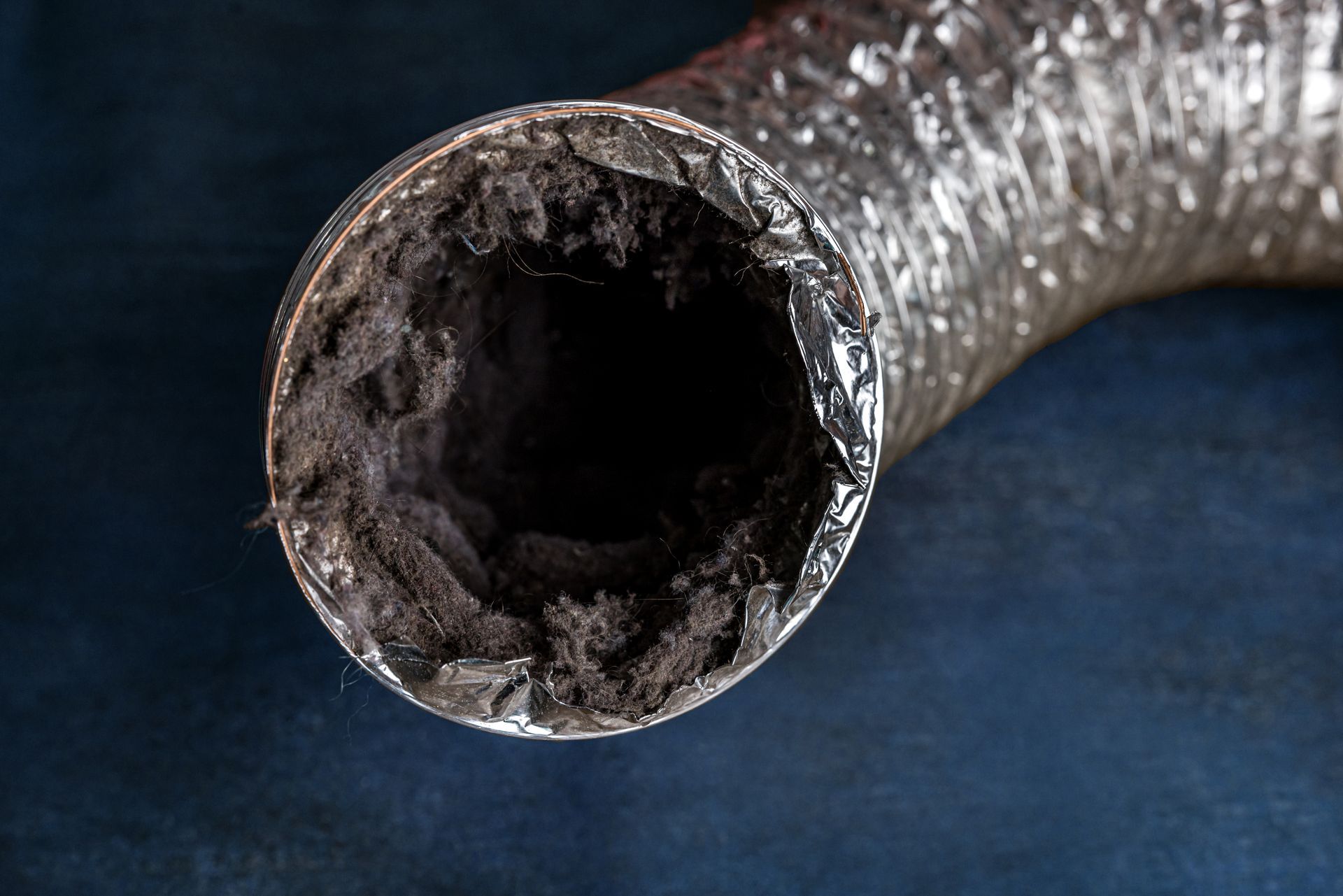
- Dirty Ducts: Accumulation of dust, debris, and even mold can impact air quality and airflow.
- Uninsulated Ducts: Ducts running through unconditioned spaces should be insulated to prevent heat gain or loss.
- Duct Damage: Crushed, disconnected, or deteriorated ducts.
Our Ductwork Services Include
- Ductwork Installation: Expert design and installation for new construction or system replacements, ensuring optimal sizing and layout.
- Duct Repair & Sealing: Identifying and sealing leaks, repairing damaged sections, and reinforcing connections to prevent air loss. We often use advanced sealing techniques to ensure lasting results.
- Duct Cleaning: Thorough cleaning to remove accumulated dust, debris, allergens, and mold, improving airflow and indoor air quality.
- Duct Redesign & Modification: Reconfiguring existing ductwork to improve airflow, address hot/cold spots, or accommodate home renovations.
- Duct Insulation: Adding or upgrading insulation to ducts in unconditioned areas to prevent energy loss.
Don't let faulty ductwork undermine your comfort and inflate your energy bills. If you suspect issues with your ductwork, or if you're looking to maximize your HVAC system's performance, contact Patriot Electric Heating and Cooling today. We are your local experts for comprehensive ductwork services in Tyler, TX, and the surrounding areas. Call us at (903) 218-7076
or reach out online to schedule an inspection!
Pricing Disclaimer
Ductwork Repair & Modification Costs: Professional ductwork services, such as sealing, repairs, or adding vents, typically range from $400 to $2,000. Note: Final pricing depends on your home’s layout, attic accessibility, and airflow requirements. Patriot Electric Heating and Cooling provides custom assessments to ensure your system meets all safety and building codes.
Rated 5.0 stars by our Ductwork Clients
★★★★★
so my hvac was installed wrong whenever my house was built.I’ve had over three other technicians look at my hvac system over the years. Jeffery from Patriot electric was by FAR the best service technician! He took the extra steps needed to figure out my problem. When the other techs would not. He had no problem crawling under my house several times to find where my duct problem was. He was very polite and professional! I will never use anyone else again but Patriot electric! I am very satisfied!
M & B Gideon
★★★★★
Very thorough! Explained everything. He showed me a picture of what he said was a leak in the air duct. However, when my neighbor came over to duct tape the leak it turned out to be a rip in the thin covering over the actual duct not a hole in the duct. He duct taped it anyway.
Dennis
★★★★★
.had a new air conditioning system put in. They were hard working and the system is working great. From the time I ordered the system, it was just over 48 hours and the job was completed. Seth (the original repairman) and Mason, Martin and Samuel did installation , everything was done professionally. Seth came back and checked over the work done to his satisfaction. I was more than impressed.
Susan Jasper
FAQ
How can I tell if my home has hidden ductwork problems?
Your ductwork is the "circulatory system" of your home. If it is leaking, you aren't just losing money; you are breathing your attic's air.
At Patriot Electric Heating and Cooling, we tell homeowners to look for these three physical signs that usually indicate a disconnected or leaking duct:
1. "Ghosting" (Dust Trails):
- The Sign: Look at your white ceiling vents. do you see streaks of grey fuzzy dust fanning out across the ceiling paint?
- The Cause: This is not normal house dust. This is usually fiberglass insulation and attic debris being sucked into a leaky "Return" duct and blasted back into your living room. It means your system has a hole in it.
2. The "Hot Room" Syndrome:
- The Sign: You have one specific room (often a bedroom over the garage or a bonus room) that is always 5–10 degrees hotter than the hallway, no matter how long the AC runs.
- The Cause: This is rarely an "insulation" problem. It is almost always a duct that has been crushed, kinked, or disconnected in the attic, starving that room of airflow.
3. The "Attic Smell":
- The Sign: When your AC first kicks on, do you smell a musty, stale odor?
- The Cause: This is "Return Air Leakage." Your system is pulling air from your hot, humid attic instead of pulling it from inside your house. This drives up humidity and makes the air feel sticky even when the thermostat says 72°.
- The Financial Impact: The Department of Energy states that the average home loses 20% to 30% of its conditioned air through leaks. If you are paying $300 a month for electricity, that means you are paying $60 to $90 every month just to air-condition the squirrels in your attic.
Can old or damaged ductwork hurt my air conditioner’s performance?
Yes. In fact, bad ductwork is the #1 reason high-efficiency AC units die early. Putting a brand-new 16 SEER air conditioner on old, crushed ductwork is like putting a Ferrari engine in a tractor—it cannot perform, and it will overheat.
At Patriot Electric Heating and Cooling, we measure "Static Pressure" (airflow resistance) on every call. Here is why your ducts determine your system's lifespan:
1. The "Coffee Straw" Effect (Restriction):
- The Problem: Many older homes in East Texas were built with undersized ducts designed for smaller, weaker units from the 1980s.
- The Result: Modern motors are powerful. If they try to push huge amounts of air through a small tube, the pressure spikes. This forces the blower motor to run at max capacity 24/7, leading to expensive repairs and a noisy, roaring sound in your hallway.
2. The "Efficiency" Trap:
You might buy a 20 SEER system to save money on electricity. However, if your ducts leak 30% of that air into the attic, your effective efficiency drops to 14 SEER or lower. You paid for premium performance but are getting standard results.
3. Compressor Failure:
If the ductwork is restricted, the system cannot pull enough warm air across the coils to evaporate the refrigerant. This causes the liquid refrigerant to flood back into the compressor (a liquid slug), which can instantly destroy the heart of your outdoor unit.
The Bottom Line: If you are planning to replace your AC unit, do not skip the duct inspection. If the contractor doesn't look in the attic to measure the ducts, they are setting your new investment up to fail.
Do I really need to replace all my ductwork, or can it just be repaired?
Not every problem requires a full replacement. At Patriot Electric Heating and Cooling, we follow a "Repair vs. Replace" protocol based on the Material and the Damage Level.
1. When we can REPAIR it (The "Seal & Save" Approach):
- Rigid Metal Ducts: If your home has hard metal trunk lines, these rarely need replacing. We can usually seal leaks at the joints using Mastic (a specialized fibrous paste that hardens like concrete). Note: We never use standard "duct tape," as the heat in a Texas attic causes the glue to fail in months.
- Minor Disconnects: If a flexible duct has simply popped off the boot, we can reattach it with a tension strap and seal it properly.
2. When we must REPLACE it (The "Terminal" Signs):
- The "Grey Flex" Warning: If your attic has the old grey-jacketed flexible duct from the 1990s, the outer plastic layer has likely disintegrated from UV/heat exposure. Once the insulation is exposed, it cannot be sealed. It shreds when you touch it.
- The "Rodent Rule": If rats or squirrels have been in your attic, you likely need a replacement. Rodents urinate in the insulation layer of the duct. You cannot clean this; every time the AC runs, it blows vaporized urine particles into your home.
- Undersized Design: If the ducts are physically too small to handle the airflow of your modern AC unit (causing high static pressure), sealing them won't help. They must be upsized to allow the system to breathe.
- The ROI Reality: If your ducts are leaking 15% or less, a repair (sealing) is a great investment. If they are leaking 30% or more, or if they are over 20 years old, patching them is usually throwing good money after bad.
Proudly Serving East Texas
We provide comprehensive electrical and HVAC services to Tyler, Longview, Athens, Palestine, Sulphur Springs, and Jacksonville.
Our local service area also includes:
- Lindale
- Whitehouse
- Bullard
- Kilgore
- Henderson
- Gilmer
- Mineola
- Winnsboro
- Emory
- Diana
- Reklaw
- Canton
- Van
- Chandler
- Hawkins
- Gladewater
- Troup
- Rusk
- Quitma
- Point
- Overton
- Mt. Enterprise
- Yantis
- Como
- Wills Point
- Mabank
- Malakoff
- Montalba
- Frankston
- Ben Wheeler
- Holly Lake Ranch
- Arp
- Cushing
and surrounding communities.